
Extending Zero-Trust Into True Cyber Resilience
Prevent-First
The world needs a new security strategy in IT and OT.
A bold, clear strategy, described in a tone that is equally clear – the kind of strategy that sets the standard for the next practice in IT- and OT security.

Zero-Trust as Methodology, Not a Tool
Since 2010, Zero-Trust has been hailed as the ‘gold standard for cybersecurity’.
Zero-Trust was never meant to be a product. It is a methodology, a framework and remains as a powerful principle, built
on the principle of “never trust, always verify, and least privilege”.
A set of practices, that if applied correctly, improves and strengthens the security posture in IT and OT
environments.
But Zero-Trust alone cannot guarantee security. Why?
Because Zero-Trust still lives within the constraints of network-centric and reactive architectures,
when trying to make complex networks, IP ranges, and legacy connectivity secure – but it still leaves
too many exposed edges. Verification helps, but attack surfaces remain visible to adversaries.
Perfect Zero-Trust is unattainable. That is where Prevent-First Security begins!





Why Prevent-First Is Needed – and Different
Prevent-First Security extends and operationalizes Zero-Trust.
It not only shrinks the attack surface – it removes exposure entirely, modern threat actors exploit complexity.
Every open port, IP address, or endpoint becomes a signal of exposure. Detection-based models (SIEM, EDR, SOC-centric workflows)
may respond quickly, but they still operate another exposure has already happened.
Prevent-First shifts the paradigm: by eliminating assets are visible to unauthorized users and insiders,
or external adversaries – the vulnerabilities they want to exploit, cannot materialize.
Prevent-First transforms security from reactive defence into proactive invisibility.
Instead of chasing endless Indicators of Compromise, The Enterprise becomes a null state: Invisible, unreachable, uncompromisable.
Features That Extend Zero-Trust Into Prevent-First
Prevent-First builds on Zero-Trust but closes its blind spots through a guard-railed, micro-perimeter- based approach:
Guard-railed Access
and Control
Every user, device, and session is continuously validated against attributes, roles, and contextual rules. Access is never broad—not at network level. It is session-based, policy- driven, and enforced by guardrails that can’t be bypassed. Users can only reach what they are explicitly entitled to
Micro-Perimeters
Each resource (Data, Application, Asset, Service – DAAS) is isolated within its own microfortress perimeter, enforcing “least-privilege by design.”
No fragile perimeter, adversaries have nowhere to pivot or move laterally.
Session, Access, and Resource Segmentation
Users don’t access networks; they access single authorized gateways. Each session is unique
(micro-segment), ephemeral, and fully logged.
Compromise of one does not extend to others.
Null State and Ephemeral Connectivity
Prevent-First eliminates the “always-on” network problem. Connectivity exists only when needed and disappears without residue.
No standing connections, no exposed pathways, only when validated users
request access does a secure, ephemeral session appear — and it vanishes once the work is done.
Advanced Security Policy Engine
Business logic, compliance requirements, and operational context are codified into enforceable rules, executed automatically and consistently.
VPC – Virtual Private Connectivity
Prevent-First goes beyond VPNs or overlay networks, truly ephemeral by design.
It creates one-to-one secure tunnels
between a verified user and a single entitled resource. Unlike “virtual private networks,”
there is no broad reach, no shared access, and no leak paths.
Supported by
The Prevent-First framework is supported by these companies and organizations




Zafehouze Solutions
Lifu Technologies Africa
Cybrcovr
Audun Jøsang
Cybersecurity professor at UiO


Jacob Arndt
CEO, CoManage-IT
Luis Diaz
CEO, IMAGEN TI S.A. de C.V.
The Prevent-First framework is supported by these individual persons
Niels Ingor
Ashutosh Dhar Dwivedi
Assistant Professor (Cyber Security Group)
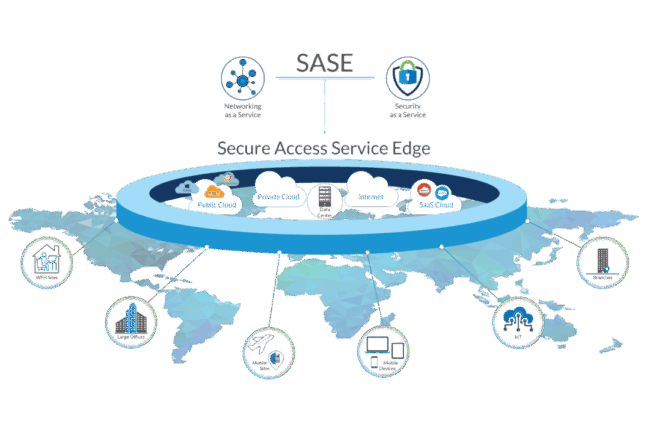
Why Prevent-First Surpasses SASE and SDP
Because it delivers invisible, guard-railed, ephemeral, and policy-bound connectivity.
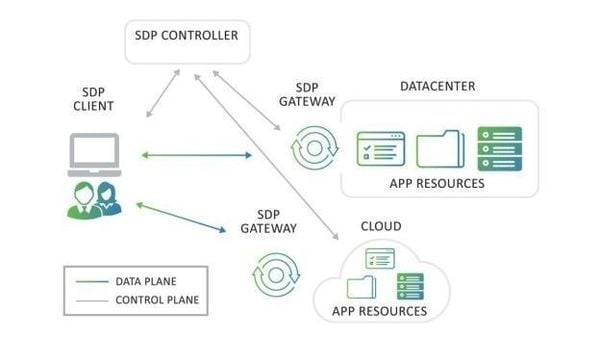
SDP
(Software-Defined Perimeter) Provides cloaked access, but still relies on network presence and policy enforcement at the
perimeter layer.
Prevent-First instead enforces at the session and resource level, leaving no open surfaces. SDP relies heavily on detection after compromise attempts.
Prevent-First Difference
Unlike Zero-Trust, SASE or SDP – which all reduce risk but leave exposure, Prevent-First eliminates exposure entirely, collapsing the attacker’s reconnaissance phase.
They all improve security but remain reactive in their core.
- No exposed IP addresses.
- No network-level trust.
- No standing pathways.
- No “detect after attack” dependency.
Instead, it delivers invisible, guard-railed, ephemeral, and policy-bound connectivity.
The Jericho Forum and ‘Deperimeterization’
The Jericho Forum foresaw this shift two decades ago with the concept of ‘deperimeterization’ – the idea that network perimeters dissolve in a hyper-connected world.
Prevent-First takes this vision further: instead of trying to defend a disappearing perimeter, it enforces micro-perimeters around every resource.
- No reliance on network borders.
- No broad trust zones.
- Everything operates as though no perimeter exists – because none needs to.
Business Benefits of Prevent-First
For boards, executives, and regulators, Prevent-First is not just technical rigor – it is strategic risk control:
- Risk Reduction: Exposure drops by more than 95%, reducing likelihood of breaches and
regulatory penalties. - Operational Resilience and Continuity: Systems become resilient to ransomware, phishing,
and insider abuse. Business continues uninterrupted, even under global attack conditions. - Cost Efficiency: Shrinks SOC telemetry, lowers SIEM ingestion, reduces breach-related losses.
- Compliance Simplification: Built-in alignment to NIS2, GDPR, ISO 27001, CIS Controls, CMMC, and other frameworks.
- Reputation Protection: Eliminates the public fallout of compromise by preventing breaches
outright. - No exposure = no opportunity for attackers.
- Regulatory confidence with compliance frameworks (NIS2, GDPR, ISO, NIST) automatically
supported by design. - Lower CAPEX/OPEX cost by eliminating complexity, false positives, and reactive churn.
The Call to Action
Prevent-First is the natural modern extension of Zero-Trust. Where Zero-Trust verifies, Prevent-First
make unconditional actions impossible. Where SASE and SDP reduce exposure, Prevent-First removes
it. Where deperimeterization predicted the collapse of borders, Prevent-First creates new ones at the
most atomic level: the session, the user, the resource.
It translates directly into a lower ‘total cost to control cyber-risk’, while also avoiding the outsized
losses that follow major outages and data theft. The same preventive rules can be extended to
partners and subcontractors, strengthening the supply chain and satisfying emerging obligations such
as compliance and regulations.
This is the next practice in IT and OT security – it closed the gaps the others leave open. Modern
enterprises should not settle for ‘less exposure’ – they should demand ‘NO EXPOSURE’.

How do we do it ?
If you’re an enterprise, you start by:
- Mapping your protect surface.
- Applying Comply-to-Connect to every device and user identity.
- Designing micro-perimeters around business functions and services, not networks.
- Shifting 80% of security investment from detection to prevention.
If you’re a consultant or policymaker you use Prevent-First as a lens to evaluate architecture, governance, and exposure.
It’s the difference between assessing “what could go wrong” and proving “what cannot go wrong”.
If you’re a vendor or product builder you use Prevent-First principles to make your solutions non-exploitable by design; ensuring that identity, session, and access control enforce prevention, not just audit compliance.
If you believe cybersecurity is about preventing incidents – not just reacting to them: JOIN THE MOVEMENT.
Have your business entity added to the list of Prevent-First supporters.
Let’s evolve cybersecurity from best practice to next practice.
Be In Touch
Contact the team
- info@prevent-first.eu